Notes from the 2026 Grape Harvest

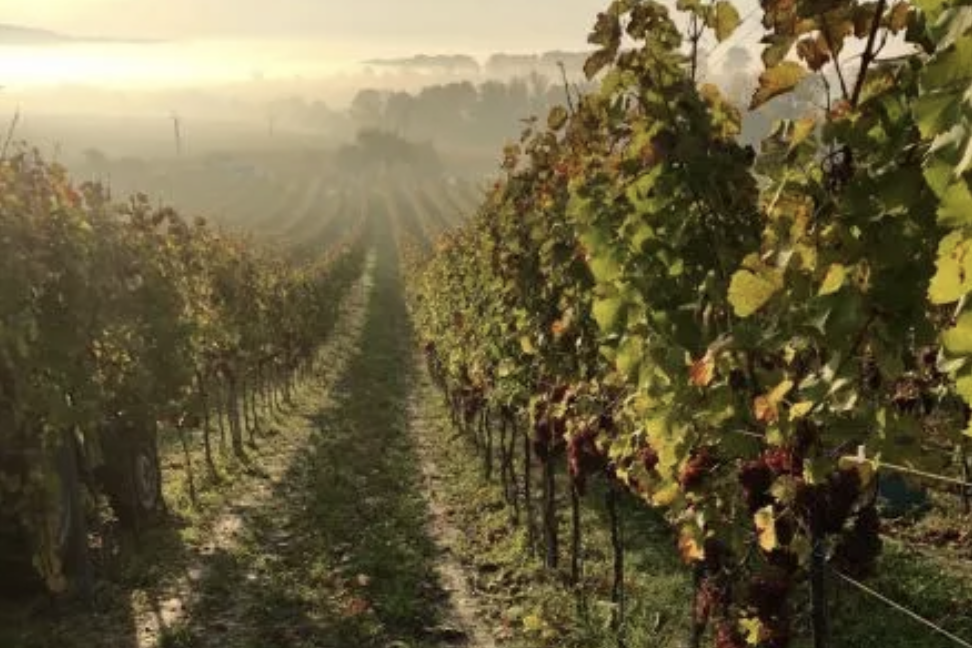
Every day now we head out to the vineyards and bring another batch of grapes back to the cellar. This year’s harvest will be significantly smaller than last year’s, but the grapes are wonderfully healthy, beautifully ripe, and we’re delighted with their initial lab results. The 2026 vintage has shown us just how much strength the vines possess.
The grape harvest has its own rhythm every year. Early in the morning, we meet in the vineyard, pick up our pruning shears, and gradually fill one crate after another. We continuously transport the grapes to the winery, where the next phase of the work begins in the cellar.
It's a beautiful, challenging, and intense time during which you stop counting not only the hours but also the days for a while.
This year we’re harvesting practically every day, as long as the rain doesn’t interrupt our work. And judging by how the harvest is progressing, it will soon be over. It’s mid-September, and yet this year’s harvest in South Moravia is already drawing to a close. Just a few years ago, something like this would have seemed unusual. Climate change is becoming increasingly tangible for us in the vineyards.
The summer when we watched every cloud
From our winery’s perspective, the 2026 vintage was the driest year we have ever experienced. In the Mikulov region, there was almost no rain for weeks on end, and temperatures rose to exceptionally high levels. Over the course of two summer months, we recorded approximately 15 millimeters of rainfall in Mikulov.
Anyone who spent time around the vineyards that summer could see it at a glance. The grass was parched, and the soil desperately needed water.
We were desperate for rain. Every cloud on the horizon gave us hope that this time it would finally rain properly. But no significant rainfall came.
The grapevine is an incredibly resilient plant. Thanks to its deep roots, it can withstand much more than most other crops. Even so, it has its limits. During the hottest spells, its growth slowed, and in some places, its development nearly came to a halt for a time. In some varieties, the berries ripened more slowly and, due to a lack of water, remained smaller and contained less juice.
This year, there’s a little more something special in every box
We already suspected during the summer that the harvest would be smaller. We had originally expected a decline of 20 to 30 % compared to 2025. Now that we’re harvesting vineyard by vineyard, we can see the true extent of the drought much more clearly.
Overall, we expect the harvest to be approximately 40 to 50 % lower. The number of grape clusters is not lower. It is simply that the clusters and individual berries are significantly smaller and contain less juice.
When you spend the whole year watching the vines grow, tending to them, and looking forward to the harvest, a result like this is naturally disappointing. Behind every grape lies a great deal of human labor, time, and hope.
At the same time, however, we feel great joy during the harvest.
The grapes we’re bringing into the cellar are wonderfully healthy and beautifully ripe. The dry weather has significantly reduced the risk of fungal diseases; the berries are clean, and the sugar content is excellent. The initial lab results also look very promising.
So there are fewer grapes. That makes every box we harvest this year all the more precious to us.
The first grape harvest conducted entirely using organic methods
This year is special for us for one more reason. For the first time, we are managing all of our vineyards entirely under organic farming practices.
We are currently in a transitional period leading up to organic certification, and we are pleased that we were able to bring the grapes through to harvest in excellent condition.
The dry weather helped us in this regard. At the same time, however, it reminded us that sustainable viticulture isn’t just a matter of the products we use in the vineyard. Soil health, managing the space between rows, and the ability to retain every drop of water in the landscape are becoming increasingly important.
Today, a winemaker can no longer limit himself to caring for the vines. He must care for the entire environment in which the vines thrive.
For us, an eco-friendly approach isn’t just a path to certification. It’s a commitment to our vineyards, to Mikulov, and to the people who drink our wines. We want to create wines that we ourselves enjoy opening at home around the dinner table—and that we can stand behind.
Will the class of 2026 be exceptional?
Over the summer, we said to each other several times: “If it rained heavily now and the grapes swelled up some more, this could be the vintage of the century.”.
In the end, the rain didn't come in the amounts we had hoped for, and we now know that, in terms of volume, this will definitely not be a record year.
But what makes it exceptional may lie somewhere else entirely—in its low yield, the health of the grapes, and their concentration.
The sugar content is excellent, but as always, we’ll also be monitoring the acidity, pH, and—above all—the overall balance of the must. Only once all the grapes are safely under cover and the individual lots have been processed will we be able to say what the 2026 vintage has truly brought us.
Now we just take it one day at a time. In the morning, we head out to the vineyards; then we take the grapes to the cellar; and in the evening, we get everything ready for the next day.
We're tired, but happy. Because even after such a challenging summer, we're holding beautiful, healthy grapes in our hands.
The 2026 vintage gave us less than we had hoped for. However, we believe it has all the more to offer the wines that will be made from it.
Petr Fučík, founder of Vinařství Fučík

 Red
 White
 Rosé
 Orange
 Sparkling

 Gift vouchers
 Gift sets
 Wine cosmetics